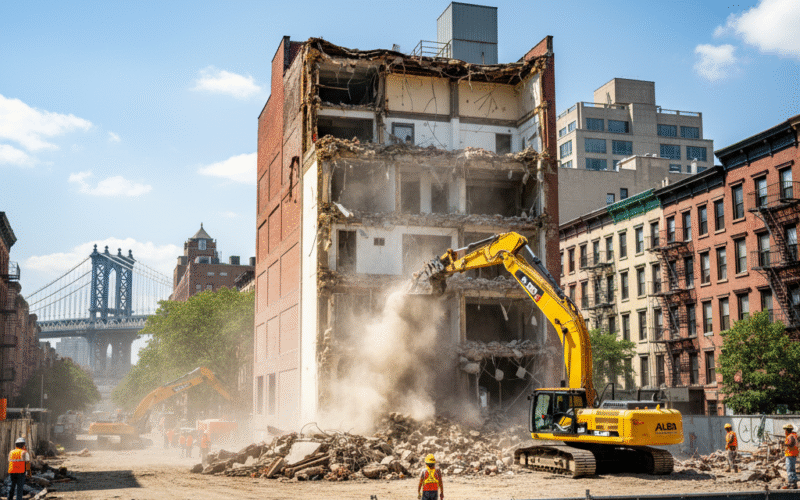
When people think about demolition in a city like New York, the first images that come to mind are heavy machinery, towering cranes, and clouds of dust. It’s easy to imagine demolition as a purely mechanical process driven by technology and equipment. But behind every controlled collapse, every carefully dismantled building, and every safe job site is something far more human: a dedicated workforce.
This is where the story of Andrew Horan Alba becomes significant. His approach to demolition highlights not just compliance, efficiency, or technology, but the human side of demolition. Through his leadership, Alba demonstrates that it’s the workforce — their safety, collaboration, and skill — that truly defines the success of every project.
In this article, we’ll explore how Andrew Horan Alba’s workforce in action redefines what it means to do demolition right, reminding us that at its core, construction and demolition are human stories.
Who is Andrew Horan Alba?
Andrew Horan Alba has emerged as a recognized figure in New York’s construction and demolition sector. Known for his safety-first philosophy, Alba has built a reputation for projects that are both compliant and innovative. But beyond his technical expertise, what sets him apart is his emphasis on the people who make demolition possible.
In a field often dominated by headlines about machinery and regulations, Alba insists that the spotlight should also shine on the workforce itself — the skilled individuals who risk their lives daily to reshape the city skyline.
Why the Human Side of Demolition Matters
It’s tempting to think of demolition as just a technical exercise. But in reality, demolition is one of the most dangerous forms of labor in the construction industry. According to OSHA, demolition carries risks such as:
- Building collapse due to misjudged structural integrity.
- Hazardous material exposure (asbestos, lead, silica dust).
- Falls from heights.
- Heavy equipment accidents.
Machines may perform the heavy lifting, but it’s workers who plan, guide, and manage every step of the process. Without their expertise, precision, and cooperation, demolition would be chaos.
This is why Alba’s leadership matters — he ensures the human factor is central to planning, execution, and review in every project.
Andrew Horan Alba’s Workforce Philosophy
1. Safety as a Human Right
For Alba, worker safety isn’t just compliance with regulations — it’s about protecting people’s lives and livelihoods. His workforce is trained not just to follow safety rules but to see safety as part of their daily culture.
- Daily safety briefings.
- Worker-led hazard identification.
- Proper protective gear provided without compromise.
By elevating safety from a checklist to a human right, Alba ensures his workforce feels valued and protected.
2. Empowerment Through Training
Alba invests heavily in training because he knows that a skilled workforce is a safe workforce. His projects often include:
- OSHA certification for all employees.
- Specialty training for handling hazardous materials.
- Cross-training so workers can step into multiple roles if needed.
This makes the workforce more adaptable and confident, reducing accidents and delays.
3. Teamwork Over Hierarchy
Instead of treating workers as replaceable laborers, Alba fosters teamwork where every voice matters. Workers are encouraged to contribute ideas, raise concerns, and collaborate with engineers and supervisors. This bottom-up approach not only boosts morale but also strengthens project outcomes.
A Case Study: Demolition in Manhattan’s East Side
To see Andrew Horan Alba’s workforce in action, let’s look at one of his signature projects.
Project: The demolition of a 10-story office block to make way for residential development.
Challenges:
- Proximity to two schools.
- Presence of asbestos in wall insulation.
- Tight deadlines due to client demands.
Workforce Actions Inspired by Alba’s Leadership:
- Worker-Led Safety Committees – Teams of laborers rotated responsibilities for site inspections, giving workers ownership of safety.
- Protecting the Public – Alba’s workforce installed advanced pedestrian safety tunnels and monitored air quality daily to protect nearby schoolchildren.
- Skill-Based Collaboration – Workers trained in asbestos handling collaborated with demolition crews to safely remove hazardous materials before major tear-down began.
Results:
- Zero violations from the Department of Buildings.
- No community complaints during the entire project.
- Project completed on schedule, with the client praising the professionalism of the workforce.
This case study illustrates that Alba’s emphasis on the human side of demolition pays off in measurable results.
Technology Meets Humanity: Alba’s Balanced Approach
While Alba celebrates the workforce, he also integrates technology to make their jobs safer and more efficient. For him, technology isn’t about replacing people — it’s about protecting and empowering them.
Examples include:
- Drones for inspecting hazardous zones before sending in workers.
- Wearable sensors that track worker exposure to dust, heat, or vibration.
- 3D modeling software that gives crews a clearer understanding of structural risks.
By merging high-tech solutions with human decision-making, Alba creates a demolition process that is both modern and humane.
The Human Benefits of Alba’s Workforce-Centered Model
- Morale and Retention – Workers stay longer when they feel respected and safe.
- Skill Development – Continuous training gives workers opportunities to grow and advance.
- Community Trust – Projects led by Alba’s workforce often receive positive recognition from surrounding neighborhoods because of the visible emphasis on safety.
- Efficiency Through Care – Ironically, when the human side is prioritized, projects move more smoothly and efficiently because workers are motivated to perform at their best.
Lessons from Andrew Horan Alba’s Workforce in Action
- Demolition is Human-Centered – Behind every machine is a worker whose life and expertise matter.
- Safety is Culture, Not Compliance – Alba shows that true safety comes from culture, not just regulation.
- Training is Empowerment – A trained workforce is a confident and capable workforce.
- Collaboration Builds Success – The workforce thrives when teamwork is prioritized over rigid hierarchy.
Why This Matters for NYC and Beyond
New York City is constantly rebuilding. Old buildings come down, and new ones rise. In this fast-moving environment, the human side of demolition is often forgotten. Alba’s example reminds us that skyscrapers and condos don’t just appear — they are built on the backs of workers who risk their lives daily.
By emphasizing workforce empowerment, safety, and teamwork, Andrew Horan Alba offers a model for cities worldwide: demolition doesn’t have to be dangerous chaos. It can be structured, safe, and respectful to the people who make it happen.
FAQs About Andrew Horan Alba’s Workforce
Q1: What is unique about Andrew Horan Alba’s workforce approach?
He puts workers at the center of demolition, prioritizing safety, training, and collaboration instead of relying solely on top-down leadership.
Q2: How does Alba balance technology and labor?
He uses drones, sensors, and modeling tools to reduce risks for workers, showing that technology should serve the workforce rather than replace it.
Q3: What is the biggest benefit of Alba’s workforce philosophy?
Higher safety standards, improved morale, and smoother project execution.
Q4: Can Alba’s workforce model apply outside demolition?
Yes — the principles of respect, empowerment, and teamwork are universal to any labor-intensive industry.
External References
Final Thoughts
At its core, demolition is not just about tearing things down — it’s about building trust, safety, and progress for workers and communities. The human side of demolition, as shown by Andrew Horan Alba’s workforce in action, proves that people, not machines, are the true heart of construction.
By centering projects on human dignity, safety, and empowerment, Alba writes a new chapter in the story of labor — one where the workforce is celebrated, respected, and protected. His philosophy offers a roadmap for the future: a demolition industry where progress never comes at the cost of people.