Demolition is one of the most high-risk activities in the construction industry. From old building tear-downs to large-scale urban redevelopment, the process can present dangers if not handled with care. In a city like New York, where the skyline is constantly evolving, safe demolition practices are not just a recommendation — they are a necessity.
This case study focuses on Andrew Horan Alba, a professional whose work in the construction and demolition sector has been tied to the push for safer practices in NYC. By examining his approach, influence, and lessons learned from the field, we gain insight into how urban environments can better manage risk while progressing toward modernization.
Introduction to Andrew Horan Alba
The name Andrew Horan Alba has become associated with efforts in improving safety standards in demolition projects across metropolitan areas. While many know him for his leadership within project management and safety advocacy, his impact extends far beyond individual worksites. He represents a case study of how individual professionals can push for systemic change in industries where risks are high, and consequences can be severe.
In NYC, where thousands of demolition permits are filed each year, the stakes are even higher. From small brownstones in Brooklyn to massive commercial towers in Manhattan, every project must balance speed, cost, and — most importantly — safety.
The Context: Demolition in New York City
New York is unique in its challenges:
- Dense urban fabric – Buildings often share walls or sit within inches of neighboring properties.
- Heavy pedestrian and vehicle traffic – Demolitions must account for public safety beyond the site.
- Historical structures – Older buildings come with risks such as unstable foundations, asbestos, and outdated materials.
- Regulatory oversight – NYC Department of Buildings (DOB) enforces strict codes, but lapses and accidents still occur.
The tragic accidents seen in demolition history — building collapses, equipment failures, or worker injuries — highlight the importance of ongoing reform. This is where case studies like that of Andrew Horan Alba become invaluable.
Andrew Horan Alba’s Role in Safer Demolition Practices
1. Safety-First Philosophy
One of the defining characteristics of Andrew Horan Alba is his insistence that safety must come before speed and cost. While construction industries often cut corners to meet deadlines, Alba’s philosophy emphasizes long-term responsibility.
His approach has been described as:
- Proactive risk assessment – Identifying hazards before they occur.
- Worker training – Equipping demolition teams with up-to-date safety knowledge.
- Technology integration – Using monitoring systems and modeling software to plan safer demolitions.
2. Advocacy for Stronger Regulations
Alba’s work also intersects with policy. In NYC, stricter demolition guidelines have been implemented over the past decade, and voices like his contributed to shaping discussions.
He has advocated for:
- Mandatory safety audits prior to demolition approval.
- Use of structural integrity scans to predict collapse risks.
- Regular inspection checkpoints during multi-stage demolitions.
3. Innovation and Tools
Beyond regulations, Andrew Horan Alba has been an advocate for leveraging technology-driven demolition practices. From drone inspections that allow engineers to analyze rooftops and facades, to 3D modeling that predicts stress points, Alba has encouraged the adoption of tools that lower human risk while improving accuracy.
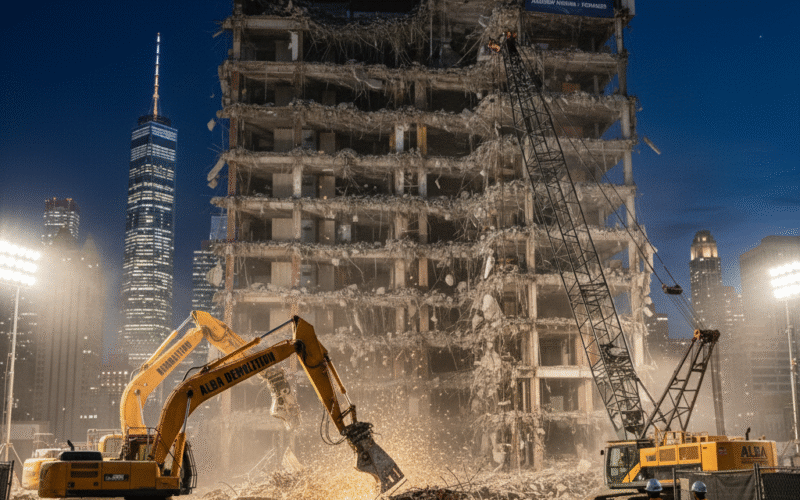
Case Study: A Midtown NYC Demolition Project
One of the most discussed examples of Alba’s influence comes from a high-profile demolition project in Midtown Manhattan.
Project Overview
- Structure: A 12-story office building slated for redevelopment.
- Challenges: Shared walls with two operational businesses, heavy foot traffic, and asbestos presence.
- Objective: Complete demolition without compromising neighboring properties or endangering pedestrians.
Alba’s Approach
- Comprehensive Pre-Demolition Study – Alba’s team carried out a six-week analysis of the building’s structure, asbestos content, and surrounding infrastructure.
- Public Safety Measures – A unique pedestrian shield system was installed along sidewalks to allow safe passage during demolition.
- Worker Safety Protocols – Daily safety briefings were conducted, combined with wearable tech that monitored worker movements and potential exposure to harmful materials.
- Phased Demolition Strategy – Rather than a quick teardown, the building was dismantled floor by floor, ensuring structural stability throughout the process.
Results
- Zero worker injuries recorded.
- No damage to adjacent buildings.
- Completed within two weeks of the projected timeline.
This project is frequently cited as a benchmark in NYC demolition safety, and Alba’s role is highlighted as central to its success.
Lessons Learned from Andrew Horan Alba’s Work
1. Safety Pays Off Long-Term
Although safer demolition practices may initially increase costs and extend timelines, the long-term benefits — reduced lawsuits, fewer accidents, and stronger public trust — outweigh short-term savings.
2. Technology is Non-Negotiable
Modern demolition must include technology. Alba’s insistence on drones, wearables, and modeling software shows how digital tools can reduce risk and improve accuracy.
3. Cultural Shift in the Industry
Perhaps the most important lesson from Andrew Horan Alba is cultural. Safety is not just about compliance — it’s about creating a culture where every worker, engineer, and project manager prioritizes human lives over profit margins.
The Broader Impact on NYC’s Construction Industry
Alba’s influence doesn’t just stay confined to his projects. His advocacy has influenced:
- City officials and regulators – pushing for stricter safety rules.
- Construction companies – encouraging them to adopt Alba-style protocols.
- Workers and unions – who now use his case studies to push for safer working environments.
In a city where construction is a daily reality, safer demolition practices ripple out to benefit millions of residents, commuters, and business owners.
FAQs About Andrew Horan Alba and Safer Demolition
Q1. Who is Andrew Horan Alba?
Andrew Horan Alba is a professional known for advancing safety-first demolition practices in New York City, combining hands-on project management with advocacy for stronger regulations.
Q2. Why is demolition safety so important in NYC?
NYC’s dense urban environment, high pedestrian traffic, and old building stock make demolition particularly risky, requiring strict adherence to safety measures.
Q3. What technologies does Alba support in demolition?
He promotes drones for inspections, 3D modeling for structural analysis, and wearable tech to monitor worker safety in real time.
Q4. What’s Alba’s biggest contribution?
His biggest contribution is creating a blueprint for safer demolition practices that balance efficiency with human safety, particularly in complex NYC projects.
External References
Final Thoughts
The Andrew Horan Alba case study is more than a profile of one professional’s work. It’s a roadmap for the construction and demolition industries worldwide. His projects demonstrate that safety is not an obstacle to progress but a foundation for sustainable urban development.
New York City’s evolving skyline is proof that modernization and preservation of life can go hand in hand when guided by thoughtful leaders like Andrew Horan Alba. As cities continue to grow, adopting his model of safety-first demolition practices will be essential for protecting both workers and the public.